Image Manipulation Ethics: Rules for Scientific Papers
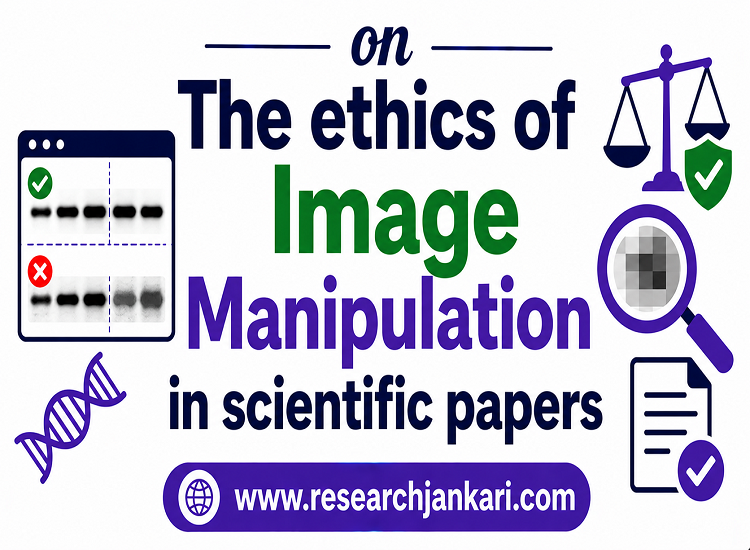
Introduction: Why Image Ethics Matter in 2026 (Why Now)
Science in 2026 needs images-from microscope pictures to
charts, medical images, lab pics and scientific artwork to share conclusions
and results. With modern editing software and Artificial Intelligence image
generation tools in widespread use, there’s also growing concern that
scientists might present an altered image.
Distort the research results, unfairly damage the reputation
of science and engender serious violations of ethics. Many journals and
academic institutions have now adopted more sophisticated systems to scan
publications for manipulation before publication. As a result, it is important
for all researchers and PhD candidates to understand the ethics of image
manipulation.
In the following article, I detail the ethical and unethical
practices of image manipulation in scientific publishing.
What is Image Manipulation in Research?
Manipulation is the adjustment of images used in research
with the aid of editing program or other editing tools.
This may involve:
- Adjusting
brightness or contrast
- Cropping
images
- Removing
unwanted elements
- Combining
multiple images
- AI-based
enhancement
It’s easy to know when something isn’t ethical, but is so
hard to tell if something really is okay.
Why Images are Important in Scientific Papers
Research images help:
- Present
evidence visually
- Support
experimental findings
- Improve
understanding of data
- Communicate
complex results clearly
Visual integrity is essential for scientific trust.
Ethical vs Unethical Image Editing
Ethical Image Editing
Minor adjustments that:
- Improve
clarity
- Do
not alter scientific meaning
- Apply
equally across the entire image
Example:
- Uniform
brightness adjustment
Unethical Image Manipulation
Changes that:
- Mislead
readers
- Alter
scientific interpretation
- Hide
or fabricate data
Example:
- Removing
unwanted experimental results
Common Types of Unethical Image Manipulation
1. Selective Editing
Modifying only selected elements of a picture to highlight
your results.
2. Removing Data
Removing spurious marks, bands or points from a series of
observations
3. Duplicating Images
Using the same image repeatedly for showing distinct
results.
4. Fabricating Images
generating misleading image data with editing tools or A.I.
5. Misleading Cropping
Cutting off parts of images to disguise contrary/negative
outcomes.
Examples in Scientific Research
Microscopy Research
We modify cell images for amplification of effects from the
experiment.
Western Blot Manipulation
Illegitimately cutting and pasting, cutting out and pasting
over bends.
Medical Imaging
Editing a scan so that a clinical finding disappears, is
made larger, smaller or increased.
Why Image Manipulation is Unethical
Unethical manipulation can:
Mislead readers and reviewers
Create false scientific conclusions
Damage public trust in science
Waste research funding and effort
Harm scientific progress
Maintaining trustworthy research requires careful and
correct presentation of data.
Journal Policies on Image Manipulation
Most journals now have strict image policies.
Researchers may be required to:
- Submit
original image files
- Explain
image processing methods
- Provide
raw experimental data
A lot of publishers use image-screening software prior to
publication.
Acceptable Image Adjustments
Generally acceptable practices include:
Uniform brightness adjustment
Contrast correction applied equally
Color balance improvements
Image resizing for formatting
These modifications should not affect the meaning.
Unacceptable Practices
Selective enhancement
Deleting background data
Changing image content
AI-generated fake data
Combining images without disclosure
Such practices violate publication ethics.
AI and Image Manipulation in 2026
AI-based tools can:
- Enhance
resolution
- Generate
synthetic images
- Modify
visual details automatically
The benefits of AI tools are counteracted by growing
potential for scientific misconduct in the hands of irresponsible
practitioners.
How Journals Detect Manipulated Images
Journals use:
- AI-assisted
screening tools
- Forensic
image analysis
- Manual
reviewer checks
They look for:
- Duplicate
patterns
- Editing
inconsistencies
- Metadata
irregularities
Consequences of Unethical Image Manipulation
Paper rejection
Article retraction
Loss of academic reputation
Institutional disciplinary action
Funding and career consequences
Research integrity case cases involving the most severe
offenses may be subjected to a research misconduct investigation.
Practical Example
This figure shows a researcher adjusting brightness
uniformly over the microscopy image.
This is generally ethical.
However the removal of cell components in cell structures to
strengthen conclusions would be unethical.
Best Practices for Ethical Image Handling
Keep original raw image files
Document all image adjustments
Apply edits uniformly
Disclose processing methods clearly
Follow journal image guidelines carefully
Transparency is essential.
Role of Research Supervisors and Institutions
Institutions should:
- Train
researchers in image ethics
- Promote
responsible data handling
- Encourage
transparency in publication practices
There are lower risks of misconduct and rule-breaking when
pupils have an education.
Common Mistakes Researchers Should Avoid
Overediting images for visual appeal
Using AI tools without disclosure
Ignoring journal image policies
Failing to save raw data
Manipulating images to match hypotheses
Importance of Transparency in Scientific Communication
Scientific credibility depends on:
- Honest
reporting
- Accurate
visual representation
- Reproducibility
of findings
There is a need to maintain some ethics related to image
creation.
Future of Image Ethics in Research
By 2026, scientific publishing increasingly includes:
- Automated
image verification systems
- AI-detection
technologies
- Stronger
ethical publishing guidelines
There are increasingly higher levels of transparency being
implemented in academic studies all over the world.
Tips for Researchers
Always preserve original image files
Use editing only for clarity, not deception
Learn journal image policies carefully
Disclose all image modifications honestly
Avoid pressure to “improve” results visually
Conclusion
Manipulating images in research publications is another
contentious ethical issue by 2026. The publication of factually accurate but
doctored images, which can lead to incorrect or misleading publication of
scientific results, is a clear breach of publication ethics.
While packaging images for publication, the published image
should be handled ethically with fairness, honesty and should not distort the
true account by the investigators.
FAQs
What is image manipulation in research?
It refers to editing or altering scientific images using software tools.
Is all image editing unethical?
No, minor adjustments for clarity are usually acceptable if they do not change
meaning.
Why is unethical image manipulation dangerous?
It can create false scientific conclusions and damage research credibility.
Can journals detect manipulated images?
Yes, many journals use AI tools and forensic analysis for detection.
What should researchers do before editing images?
Keep original raw files and follow journal image guidelines carefully.
Advertisements